Power meter pedal dynamics
I've been using power meters for years, but power meter pedals bring a whole new dimension to the game. They tell you a lot more than just total power. They tell you how power is generated. When you get the measurement directly from your legs, you start to see things that you couldn't see before, even in a lab setting.
Power comes from movement, not force
Uphills are where most cyclists waste a lot of energy. Too many people ride the climb with their quads, pushing straight down. It feels strong for a moment, but soon their quads fill with lactate and their cadence drops. The vector image of power meter pedals immediately reveals where the power is actually being produced in the crank revolution. For most, it goes almost vertically down. Although effective pedaling, especially on climbs, is done in a wide arc.
When you see this in the data, everything changes. When the direction of the force starts to rotate, especially the glutes, but also the hamstrings wake up to work, the pedal feels lighter. The climb no longer feels like you have to force it up. Instead, the movement is smooth and continuous, as if the cranks were spinning in cotton wool.
Wondering how power measurement holds up to real off-road riding on the pedals? You can read more about it here.
Muscle load transfer and economy
The vector graphs provided by power meter pedals teach you to transfer the load from the glutes, especially to the buttocks and also to the hamstrings, which is crucial on long climbs. When the pedaling force vector remains controlled throughout the entire cycle, the muscle load is distributed over a larger part of the muscles and individual muscle tissue is not subjected to too much strain. In practice, this means that you can ride 20-40 minute climbs at a significantly higher average power, without muscle fatigue becoming too big problem.
An important physiological change also occurs here. When the work is distributed more widely, to several muscle groups, the local anaerobic, energy production of an individual muscle decreases. Previously, certain muscle cells, especially in the quads, could be responsible for power production excessively. When anaerobic energy production increases too high in one muscle, the breakdown of muscle glycogen accelerates dramatically. The muscle begins to consume its glycogen stores so quickly that it quickly empties locally. And when one muscle in the chain that forms the power link of the entire pedaling circle falls out of play, the entire system grinds to a halt. Even if there is still energy and glycogen in the body and muscle. But when one link is gone, it is enough to cut off the power production of the entire pedaling circle.
As technique and power output improve, that local lactate production in the muscle balances out. The musculature no longer becomes blocked due to overloading one muscle. The climbs become controlled, economical, and the muscles can withstand the constant pressure without tiring.
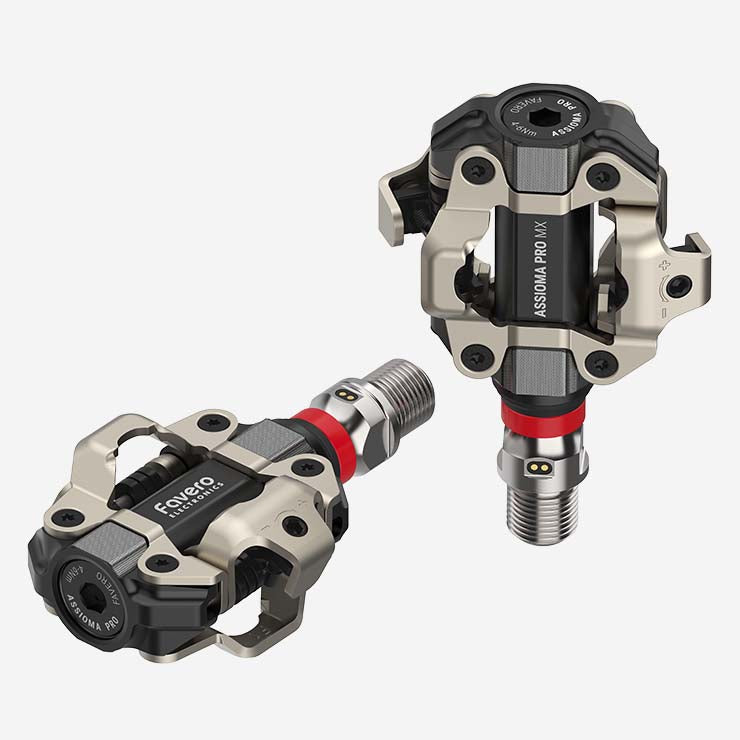
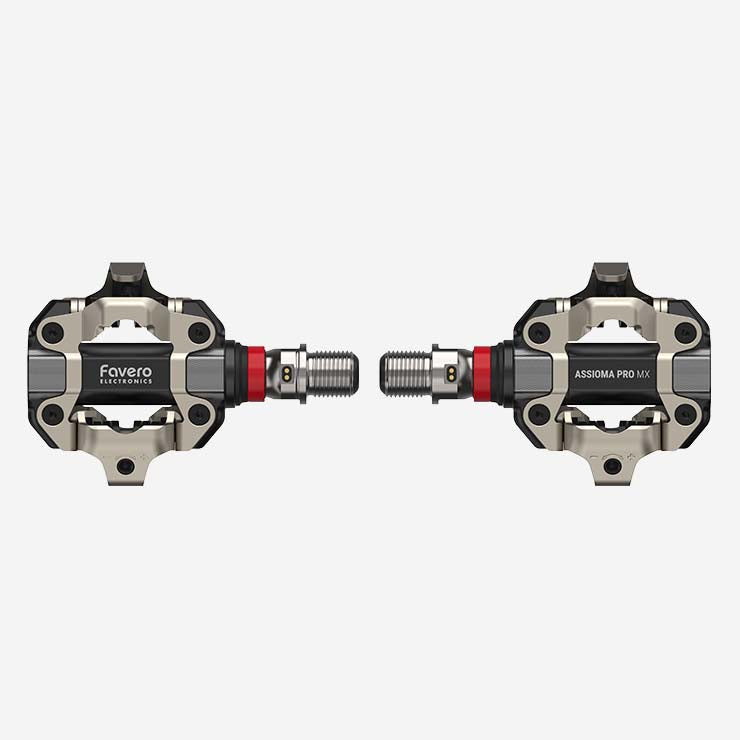
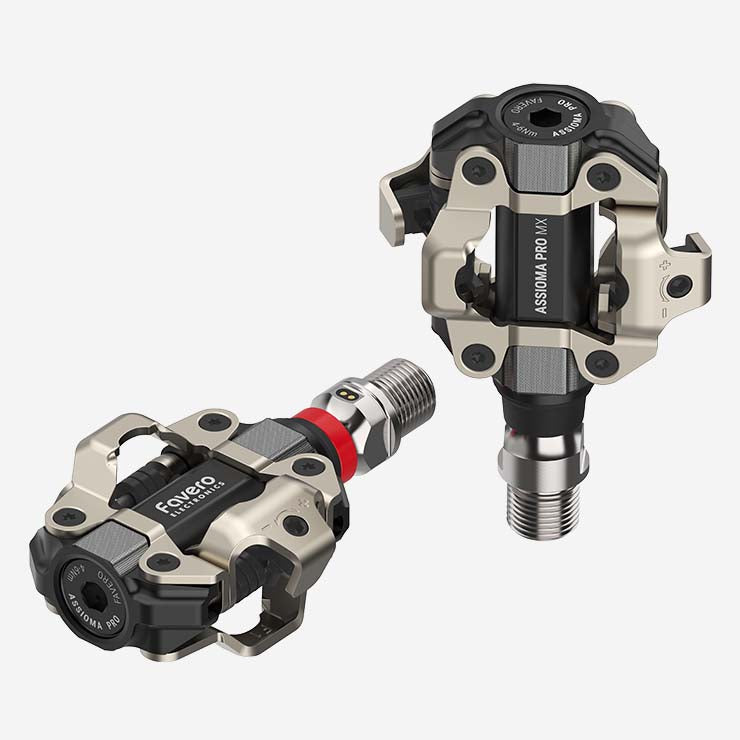
I personally noticed that when I started training with the Favero Assioma PRO MX-2 power pedals, I was able to analyze the direction of each pedal stroke and adjust pedaling optimally. I also saw how the left and right leg were separated and learned to adjust my riding position and cadence so that the load was distributed more evenly. My average power output on climbs increased, even though my subjective exertion decreased.
If you want to improve your climb economy using the same logic as I did, I created an 8-week program that effectively utilizes power data.
Union of Technology and Physiology
This is exactly where biomechanics meets physiology. When muscle work is distributed over a larger number of muscles, the load on a single muscle does not become excessive and thus fatigue does not occur prematurely. This is especially noticeable on long Alpine climbs, where even a small additional load on the muscle in the wrong place quickly breaks the momentum. There are no micro-recoveries available.
Summary – data, feeling and technology
So, the data from the power meter pedals is not just numbers. It is a window into what efficient and optimized movement and muscle work feels like. When you learn to read power vectors, you also learn to listen to your body in a new way. Climbs start to go economically, your muscles relax and riding doesn't feel like squeezing, but light.
The Favero Assioma PRO MX-2 pedals have been a crucial tool in this development. They have taught me to ride climbs more lightly, faster and with more control. So that each pedal stroke produces more power with less effort.
Did the Favero Assioma PRO MX-2 pedals decide my Finnish Championship XCM victory in Tahko MTB? Read more here.
Author: Toni Tähti, cycling coach and XCM Finnish Elite champion 2024.
Read more: Favero Assioma PRO MX-2, PRO RS-2 and Assioma DUO