Updated
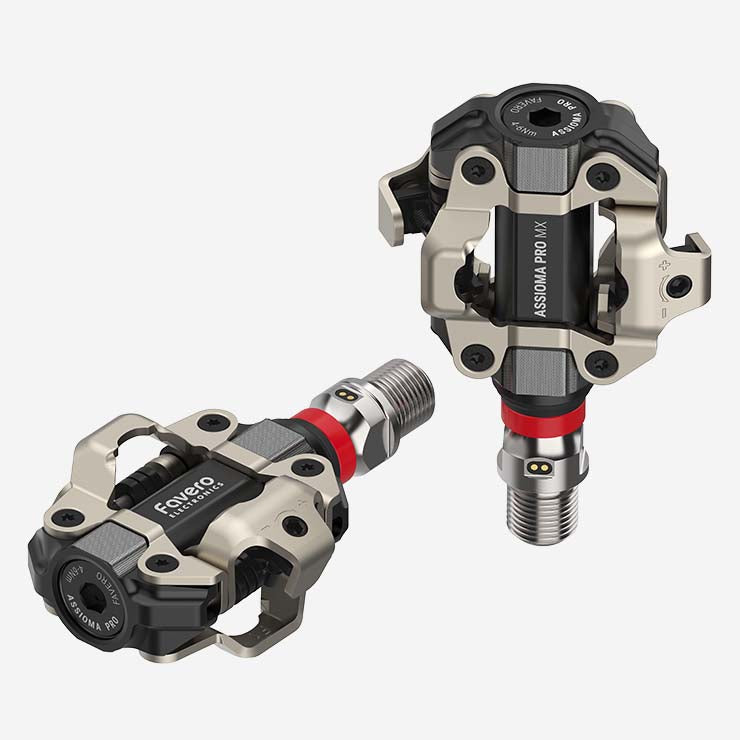
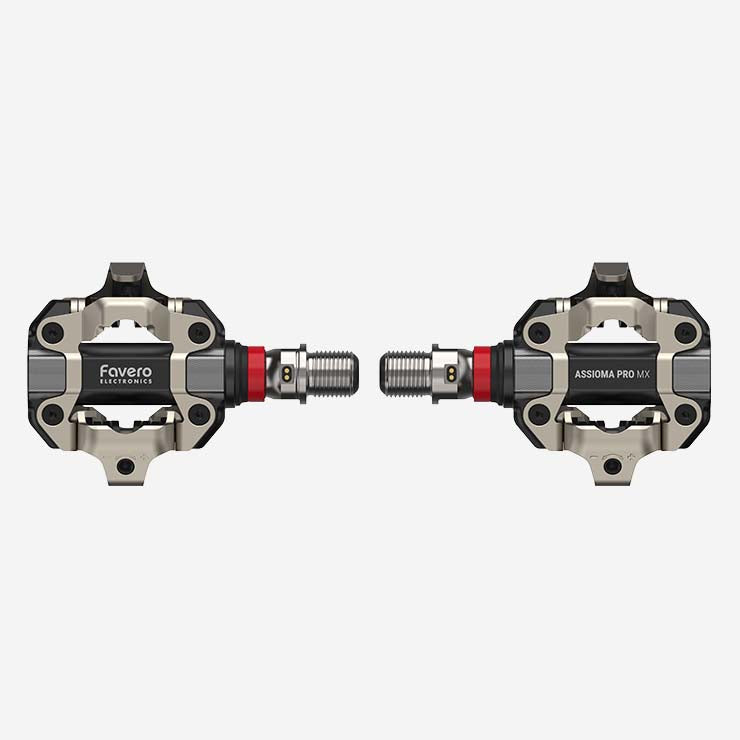
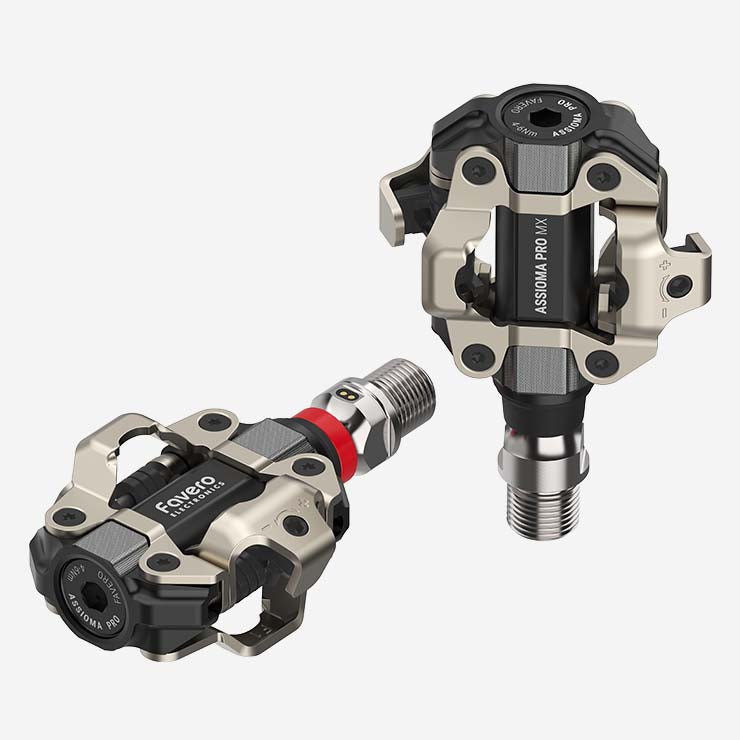
I've been riding the same pair of Favero Assioma PRO MX-2 power meter pedals since April 2024. They've now had around 30 months of use.
They've been used on gravel, on mountain bikes, in races, through Finnish winters, in rain, mud and the Alps. They've also hit more than their fair share of rocks and roots.
After 30 months, the most important finding is still very simple:
The power measurement has worked without problems the whole time.
At around the two-year mark, I replaced the pedal bodies. The power meter spindles stayed the same. After the replacement, the pedals felt practically new again.
If I were buying SPD power meter pedals for gravel or mountain biking again today, I'd still buy the MX-2.
30 months at a glance
- in use since April 2024
- gravel, XC, XCM and other mountain biking
- races and hundreds of hours of training
- rain, mud, freezing temperatures and mountain conditions
- plenty of hits on rocks and roots
- no problems with power measurement
- the connection has stayed reliable
- the readings have matched the Tacx Neo 2T well
- pedal bodies replaced at around the two-year mark
- still using the original power meter spindles
The Favero Assioma PRO MX-2 currently costs €689 at Tonin Verkkokauppa.
👉 View the Favero Assioma PRO MX-2
Why did I want to test the MX-2 for this long?
It's easy to write a review of a power meter pedal after a few rides.
The much more interesting question is what happens to it over one, two or three years.
A pedal has a pretty tough job, especially off-road. It gets wet, muddy and knocked about. Sometimes it hits a rock head-on. In winter, the temperature can change quickly and in summer, the pedals can stay wet for hours.
Meanwhile, you should be able to expect the same thing from the power measurement day after day.
What matters most to me is whether I can still rely on the pedals after years of use.
After 30 months, my answer is yes.
From gravel to technical mountain biking
I've used the MX-2 on both my gravel bike and my mountain bike.
They've been through regular training rides, long rides, hard intervals and races. That has included Finnish forests, technical XCM courses and climbs in the Alps.
Of course, pedals don't have an easy life off-road.
They've taken hits from rocks and roots. Sometimes the impact has been hard enough that my first thought was to check whether the power measurement was still working normally.
It was.
This is probably what has changed my view of power meter pedals the most. At first, I spent more time wondering how vulnerable the measuring electronics inside a pedal might be off-road.
These days, I hardly think about it.
The power measurement has stayed reliable
Durability doesn't count for much in a power meter if the readings start doing their own thing over the years.
I've repeatedly compared the MX-2's readings with a Tacx Neo 2T trainer.
In my use, the difference between them has stayed very small and the MX-2 hasn't shown any behaviour that would have made me question the reliability of its measurements.
That matters much more to me than a single accuracy percentage from a lab.
In training, a power meter should behave the same way today, next month and next year. When you use the data to guide training and analyse races, consistency matters.
I've been able to rely on the MX-2's data in the same way throughout the time I've used it.
Rain, mud and winter haven't caused problems
The pedals have sometimes been completely covered in mud. They've been ridden in the rain for hours and used in freezing winter temperatures too.
In my use, cold, water and dirt haven't caused measurement problems or connection dropouts.
That matters to me because I don't want a power meter I have to think about based on the weather forecast.
If I can ride the bike, the power meter needs to work too.
So far, that's exactly what the MX-2 has done.
Replacing the pedal bodies after around two years
The first part to show clear wear on my pedals was the pedal body itself.
After around two years of use, I replaced the pedal bodies.
I think this is one of the MX range's best features.
The measuring electronics and spindle are the valuable part of the pedal. You can replace the mechanical pedal body around them separately, without having to replace the whole power meter pedal.
Original Favero Assioma PRO MX pedal bodies are also available at a reasonable price.
In my case, this was a small service job compared with buying a completely new pair of power meter pedals. At the same time, the pedals felt practically as good as new again on the bike.
Now, at 30 months, the original power meter spindles are still in use.
That makes quite a difference to how I look at the real long-term cost of the product.
How they feel on trails and gravel
The MX-2 uses an SPD-compatible pedal system.
The feel has been one of the things I've liked from the start. The cleat locks in securely and the pedal feels like a normal, good-quality mountain bike pedal.
That matters more than it might sound on paper.
A power meter should fade into the background while you ride. I don't want to think about measuring electronics, sensors or the fact that I'm riding with a “power meter pedal”.
I just want to pedal.
The MX-2 lets me do that.
That's why I think the same pair makes particular sense for someone who rides both gravel and mountain bikes and wants to use the same power measurement on both.
The pedals are quick to move from one bike to another.
Why the dual-sided MX-2 rather than the MX-1?
The MX-2 measures the right and left leg separately.
The MX-1 measures power on one side and calculates total power from that.
For many riders, the MX-1 is perfectly sufficient.
I want dual-sided measurement because I also use the data to analyse my pedalling and how my right and left legs behave. As a coach, I also get more use from this data than from total power alone.
If your goal is simply to get reliable total power for training, the MX-1 is a very interesting option at its price.
If you want all the data, I'd choose the MX-2.
The MX-2 on gravel
Gravel is one of the uses where I think the MX-2 makes particular sense.
You get SPD pedals, dual-sided power measurement and a pedal that doesn't make you nervous at the first rocky forest road.
Power measurement also gives you much more to work with in gravel training.
On long climbs, you can pace yourself by power. On hard sections, you can see the actual load and after a long ride, the data tells you much more than average speed or heart rate alone.
And if you have both a gravel bike and a mountain bike, you can move the same pedals between them.
The MX-2 off-road
Using power off-road is a little different from using it on the road.
Power varies more. There are periods without pedalling, hard accelerations and short climbs.
That's exactly why reliable power measurement is interesting.
It shows what's actually happening on the trails.
In my coaching and training, I've also used pedal data a lot to look at how power is produced. Average power alone doesn't tell the whole story.
If you'd like to read more about that, I wrote a separate article on how power meter pedals changed the way I ride climbs:
👉 How power meter pedals changed the way I ride climbs
Have there been any problems with the MX-2 in 30 months?
Not with the measurement.
This is probably the simplest part of the whole test.
I haven't had to replace a power meter spindle. The power data hasn't started behaving erratically. The connection hasn't become a problem.
The part that wore mechanically was the pedal body, which I replaced at around the two-year mark.
I consider that a pretty good result for a product that has seen this much hard use.
Would I buy the Favero Assioma PRO MX-2 again?
Yes.
After 30 months, that's a much easier answer for me than it was after the first few months.
When a pedal is new, you can assess its features, weight, battery life and feel.
Only long-term use tells you whether you can really trust it.
Based on my pair, the MX-2 has proved to be the kind of tool you can fit to your bike and forget about.
It measures.
It lasts.
And when the pedal body eventually wears out, you can replace it without replacing the whole power meter.
If I were looking for power meter pedals for gravel, XC or XCM riding today, the MX-2 would still be my choice.
Favero Assioma PRO MX-2 price and availability
The Favero Assioma PRO MX-2 is available from Tonin Verkkokauppa.
Price €689
In stock in Finland
Fast dispatch from Finland
👉 View the Favero Assioma PRO MX-2 and order yours
If you don't need dual-sided measurement, the Favero Assioma PRO MX-1 is also available for €429.
Frequently asked questions about Favero Assioma PRO MX-2 pedals
Does the Favero Assioma PRO MX-2 suit a gravel bike?
Yes. The MX-2 uses an SPD-compatible system and is very well suited to gravel riding.
Does the MX-2 suit a mountain bike?
Yes. I've used them myself for XC and XCM riding and on technical terrain for 30 months.
Can the MX-2 handle water and mud?
In my use, rain, mud and wet conditions haven't caused any problems.
Does the MX-2 work in freezing temperatures?
In my own year-round use, freezing temperatures haven't caused problems with the measurement or connection.
Can you replace the pedal body on the Favero MX-2?
Yes. I replaced my pedal bodies at around the two-year mark. The power meter spindles stayed in use.
What's the difference between the MX-1 and MX-2?
The MX-2 measures both legs separately. The MX-1 measures one side and estimates total power from that.
Would I buy the MX-2 again after 30 months?
Yes.